
Last night at a party I got into a discussion with a friend about nature in New York City. I told my friend how I was writing the beginner’s guide Slow Nature Fast City. He smiled a wry smile and said, “Honestly, I’m skeptical about nature in NYC.”
My friend is a native New Yorker. I’ve lived in the city just shy of two decades but didn’t grow up there. Like many native New Yorkers, my friend is forthright and pragmatic — traits I find endearing. He made three points during our conversation:
- There isn’t nature in NYC
- NYC nature is man-made and doesn’t “count”
- Nature isn’t for people like us
Do you know the moment of exhilaration when you hear someone say exactly what you’ve been thinking of? That’s how I felt last night. I’ve thought about these three ideas for years.
There Isn’t Nature in New York City
My friend grew up in lower Manhattan in the 1980s and 1990s. The parks and waterfronts were dangerous places to visit. I understand why he doesn’t believe that there are more than a few pigeons, rats, and scraggly street trees in his hometown.
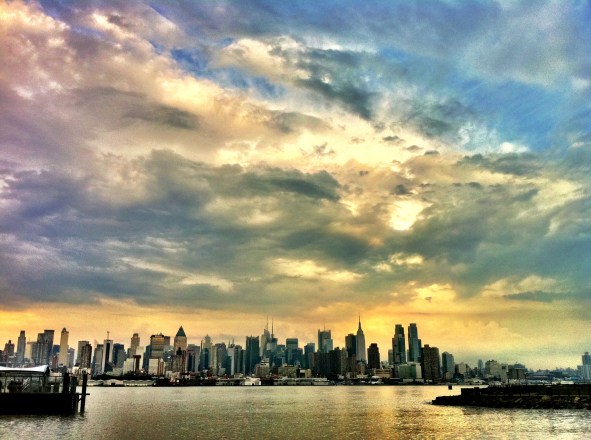
But New York City today is different. Yes, there is still crime, but the city parks and greenways are more inviting. The variety of ecosystems is startling. NYC is a city sprawled across an archipelago, bordered by estuaries and the ocean. Tides surround us, whether we recognize their existence or not.
NYC is also a vast urban forest of over 5 million trees. Meadows, waterfalls, gardens, tide pools, forests, beaches and salt marshes are within walking distance or a subway ride away. Nature is here in the concrete jungle. I discovered that you just have to pay attention to see it.
City Nature Is Man-Made and Doesn’t Count
My friend made the point that New York is one of the most man-made environments on the planet. Every inch of the boroughs has been modified by humans over the city’s 400-year history. My friend said that when we look at “nature” in NYC, from the landscape design of Central Park to the exotic cultivars of the trees in the Bronx, we must recognize that none of it is in its “natural” state.
I know that my local favorite Prospect Park is a designed landscape. (The fire hydrants along the wooded paths are stark reminders.) When I began to notice nature, I saw hundreds of wildlife species that live in or migrate through the park. The area is in use continuously. Birds are feeding, chipmunks are scurrying, turtles are sunning, and bats are fluttering overhead. Do the animals’ existence make Prospect Park “real”? I believe so.
Our conversation about the built environment reminded me of Eric W. Sanderson’s phenomenal book Manahatta: A Natural History of New York City (public library) and its expanded site The Welikia Project. Dr. Sanderson worked for nearly a decade to recreate what Manhattan looked like 400 years ago. It will change your view of the city’s history and possible future.

Nature Isn’t For People Like Us
Then my friend said something that surprised me. He confessed, “Growing up in New York, I thought nature was only for rich people.”

I was surprised because I also grew up believing that nature was for other people. I thought:
- Nature was somewhere else; you need enough money and time to go there
- You need gear; you need an REI membership and a subscription to Backpacker Magazine
- You need to look a certain way; you must be slim, fit, and able-bodied
- You need to know about plants, animals, stars and back-country survival skills
- You need to camp
I’ve discovered that none of this is true.
You can observe nature outside your front door. You can take a subway to explore new habitats. You can make a daily habit of spending time in nature in New York City.
It’s inexpensive.
You can teach yourself.
It’s not too late to start.
Ready to spend a few minutes looking at the natural world this week? Try one of these experiments in nature observation.


 Slow Nature Fast City
Leave a reply to Signs You Might Be Nature Deprived | Slow Nature Fast City Cancel reply