Slow Nature Fast City

A beginner's guide to noticing and exploring nature in NYC

  • Home
  • Start Here
  • Try This
  • Find Nature
  • Currently Reading
  • About

recent posts

  • Cherry Blossom Viewing in NYC
  • Follow the Cascades of Central Park
  • Slow Down in a City That Wants You to Speed Up
  • Five Ways to Cultivate Awe
  • Currently Reading: The Urban Bestiary

  • Weekend Plans: Pigeons, Love, and Plant Pigments

    Weekend Plans: Pigeons, Love, and Plant Pigments

    June 10, 2016

    This weekend I’m reading about shorelines and dreaming about the beach. Here are a few more ways to explore the natural world in NYC and beyond  (June 11 – 17, 2016):

    • Read how pigeons teach us about love
    • Explore the hidden urban ecology of the Brooklyn Navy Yard by bike
    • Stare at the sun (safely); go solar observing in Flushing Meadows Queens
    • Join ecologists on a sunset walk through the ancient Inwood forest 
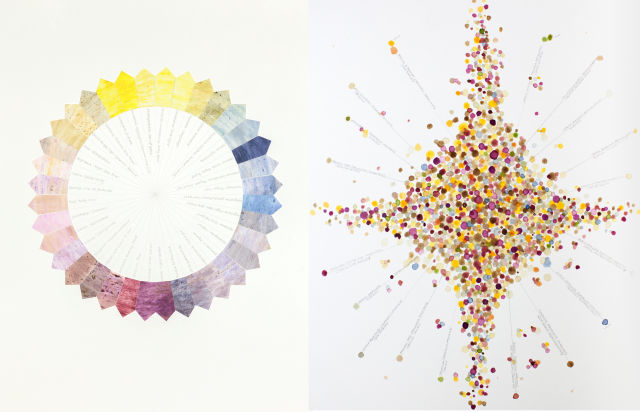
    • See Ellie Irons and Linda Stillman’s inventive use of natural plant pigments in their art exhibition Chroma Botanica 


    Chroma Botanica
    From the exhibition Chroma Botanica: Ellie Irons & Linda Stillman


    Share this:

    • Click to share on Tumblr (Opens in new window) Tumblr
    • Click to email a link to a friend (Opens in new window) Email
    • Click to share on Reddit (Opens in new window) Reddit
    • More
    • Click to share on LinkedIn (Opens in new window) LinkedIn
    • Click to share on Pinterest (Opens in new window) Pinterest
    • Click to share on Bluesky (Opens in new window) Bluesky
    Like Loading…
  • Explore Tide Pools in the Bronx

    Explore Tide Pools in the Bronx

    June 8, 2016

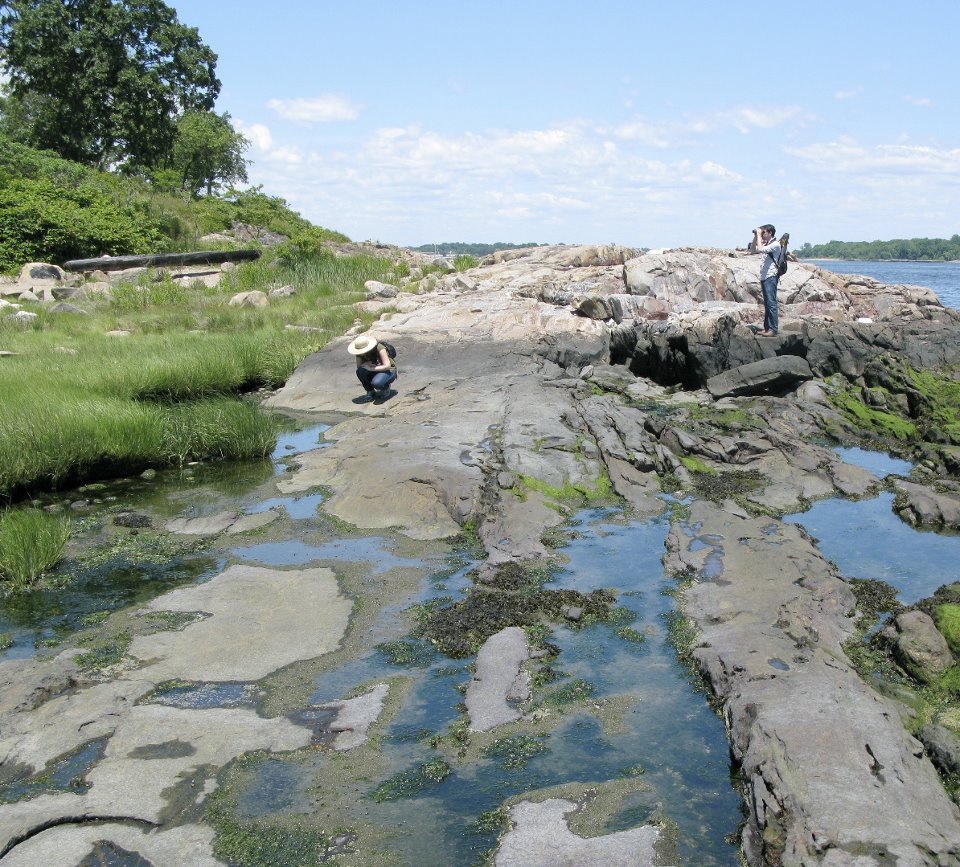
    Imagine peering into a tide pool shimmering with brown rockweed, barnacles, and darting minnows. White sailboats bob on the blue ocean in the distance. It sounds like you are on vacation in Maine, doesn’t it? Actually you took the subway to get here. You are on the rocky coast of Twin Islands in Pelham Bay Park.

    The Rocky Coast of the Biggest Park in NYC

    At a whopping 2,764 acres, Pelham Bay Park is New York City’s largest park. It’s more than three times as big as Central Park though admittedly not nearly as well-known. Unless you live in the Bronx (is Boogiedown in the house?), you will have to take a long ride on the 6 train to get there. But it’s definitely worth the trip as Pelham Bay Park has a surprising variety of landscapes. You’ll find beaches, forests, and even a salt marsh. For an incomparable view of Long Island Sound, take a walk along the rocky shores of Twin Islands. You’ll see a unique view you won’t find anywhere else in New York City.


    Photo by Alan Houston
    Photo by Alan Houston
    Photo by Anne Ruthmann
    Photo by Anne Ruthmann
    Photo by Alan Houston
    Photo by Alan Houston
    Photo by Alan Houston
    Photo by Alan Houston


    Start with a walk up Orchard Beach (known as “The Riviera of New York”), where you may pass a salsa dance party or horseshoe crabs mating.

    Continue north to the start of the Twin Islands Preserve Trail which will lead you to one of the last remaining salt marshes in the city. You may see herons, red-winged blackbirds, swans, ducks, egrets, osprey, and even raccoons who fish along the marsh.

    The rocky coast of Twin Islands is an intertidal ecosystem. At low tide, tide pools are brimming with small fish, oysters, and clams.

    Tidal pools contain mysterious worlds within their depths, where all the beauty of the sea is subtly suggested and portrayed in miniature. – Rachel Carson, The Edge of the Sea

    On the northeastern edge of Twin Islands is a large boulder known as Sphinx Rock. Once a Siwanoy Indian ceremonial site, the boulder is a glacial erratic, a rock carried by a glacial ice thousands of years ago. A smaller rock once balanced on top of Sphinx, but broke away in the 1990s.

    Go Island-Hopping

    Once you’ve explored the rocky coast of Twin Islands, head on to the adjacent Hunter Island for forest trails and rocky coasts. For a longer hike, follow the Kazimiroff Trail through the deep inland forest and on to the lagoon. Look for the  large boulder known as the Grey Mare, another glacial erratic on the eastern coast of the island.

    To see more tidal pools, head north along the wooded shore trail. The shoreline is made of gneiss, rock formed 400 million years ago. The rock melted and cooled into swirls of gray, white, and black. It’s a wonderful place to go beachcombing.

    To learn more about islands of Pelham Bay Park and how to get there, see the NYC Parks site.

    Share this:

    • Click to share on Tumblr (Opens in new window) Tumblr
    • Click to email a link to a friend (Opens in new window) Email
    • Click to share on Reddit (Opens in new window) Reddit
    • More
    • Click to share on LinkedIn (Opens in new window) LinkedIn
    • Click to share on Pinterest (Opens in new window) Pinterest
    • Click to share on Bluesky (Opens in new window) Bluesky
    Like Loading…
  • Transform Your Lunchtime

    Transform Your Lunchtime

    June 6, 2016

    The poet Frank O’Hara famously wrote his book Lunch Poems on his lunch hour. Here is how he described it: “Often this poet, strolling through the noisy splintered glare of a Manhattan noontide, has paused at a sample Olivetti to type up thirty or forty lines of ruminations.”

    I think of Frank O’Hara as the Patron Saint of New York City Lunch Hours. He went outside. He walked through Times Square. He wandered down side streets. He saw sights. He composed poems and then typed them illicitly on floor models in typewriter stores. Yes, he actually used his lunchtime.

    This week I ask you to reconsider what you do for lunch.

    lunch poems_frankohara
    Frank O’Hara, a man who fearlessly left work in the middle of the day

    Get Ready to Leave Work

    If you suspect that you are nature deprived, this simple lunchtime experiment can be a life-saver. Take a few minutes in the middle of your day to find and notice nature. This may sound like common sense, but it’s not always easy to do.

    You may feel so busy that you can’t imagine leaving work longer than it takes for you to walk to Chipotle and back. Maybe all your co-workers eat over their keyboards, or your boss schedules meetings through lunch, or you only get a short break. Perhaps you can easily walk outside for lunch but find yourself scrolling through Facebook or Gothamist instead.

    We’ve all been there. But with a little bit of ingenuity, you can get outside to try this self-assignment. Block out a lunch meeting on your calendar (no one has to know that it is a meeting with nature).  Bring your own lunch so you don’t waste time standing in line at Chop’t. Put “lunch” on your To Do list. Slip out for 30 minutes and no one will be the wiser.

    Discover Your Closest Green Spaces

    If you work near a park or waterfront, you clearly have access to an area where you can notice nature. But for many New Yorkers working in the crowded skyscraper canyons (Hello Midtown! Hello Financial District!), your first task is to find a little patch of green.

    A good way to map out your closest green areas is to fan out 5 to 10 blocks in each direction from your work. Be on the look-out for:

    • Pocket parks
    • Community gardens
    • Quieter side streets
    • Courtyards and plazas
    • Prayer gardens (at churches, temples, etc.)
    • Rooftop gardens (bars, restaurants, museums)
    • Atriums
    VahramMuratyan
    Vahram Muratyan, Mapping Manhattan: A Love (And Sometimes Hate) Story in Maps by 75 New Yorkers (©Becky Cooper courtesy Abrams Image)

    Turn Your Lunchtime Into a Nature Walk

    Once you’ve found your little patch of green (and by little, I mean it can be a row of trees on a side street), you’re ready to notice nature. A few things to consider:

    • You may have walked quickly to this spot so you can have more time. That’s great. But now it’s time to slow down. To notice nature you need to walk slowly.
    • Take your earbuds out and put your phone away
    • Focus your attention on the non-human natural world; let human distractions pass by, if you can
    • Pause in front of the trees, plants, flowers. What colors and shapes do you see? Do you know the names of these plants? It’s ok if you don’t, but are you curious?
    • Do you see animals or birds? If so, focus on them for a few minutes. Are you surprised or intrigued by their behavior?
    • Can you identify the wildlife? If you are not familiar with the birds or animals, how would you describe them?
    • Look up. Is there anything flying over head?
    • Look down. Do you see insects?

    Take at least 10 minutes noticing as much as you can during your nature walk. If you like, when the walk is over, take a few field notes or questions that came up for you.

    “One never need leave the confines of New York to get all the greenery one wishes — I can’t even enjoy a blade of grass unless I know there’s a subway handy.” – Frank O’Hara

    Have you tried a lunchtime nature walk? Do you have a favorite green space near your work? I’d love to hear about it in the comments below.

    Share this:

    • Click to share on Tumblr (Opens in new window) Tumblr
    • Click to email a link to a friend (Opens in new window) Email
    • Click to share on Reddit (Opens in new window) Reddit
    • More
    • Click to share on LinkedIn (Opens in new window) LinkedIn
    • Click to share on Pinterest (Opens in new window) Pinterest
    • Click to share on Bluesky (Opens in new window) Bluesky
    Like Loading…
  • Weekend Plans: Seeing Stars, Counting Fish, the Bliss of Storms

    Weekend Plans: Seeing Stars, Counting Fish, the Bliss of Storms

    June 3, 2016

    I’ll be traveling this weekend to visit family in the American Southwest – adobe and green chile are in my future. If you are staying in the city, here are a few ways you could spend June 4 – 5, 2016:

    • It’s horseshoe crab mating season for the next couple of weeks. Try to glimpse this sight if you can.
    • Stargaze at Brooklyn Bridge Park with astronauts and astrophysicists from the World Science Festival
    • Read about  the strange blissfulness of storms
    • Wade into the Hudson River with ecologists for the New York City Fish Count at Ft. Washington Park, 172nd St. Beach
    • Explore the wetlands of Randall’s Island in search of migrating birds with New York City Audubon

    Share this:

    • Click to share on Tumblr (Opens in new window) Tumblr
    • Click to email a link to a friend (Opens in new window) Email
    • Click to share on Reddit (Opens in new window) Reddit
    • More
    • Click to share on LinkedIn (Opens in new window) LinkedIn
    • Click to share on Pinterest (Opens in new window) Pinterest
    • Click to share on Bluesky (Opens in new window) Bluesky
    Like Loading…
  • Currently Reading: On Looking

    Currently Reading: On Looking

    June 2, 2016

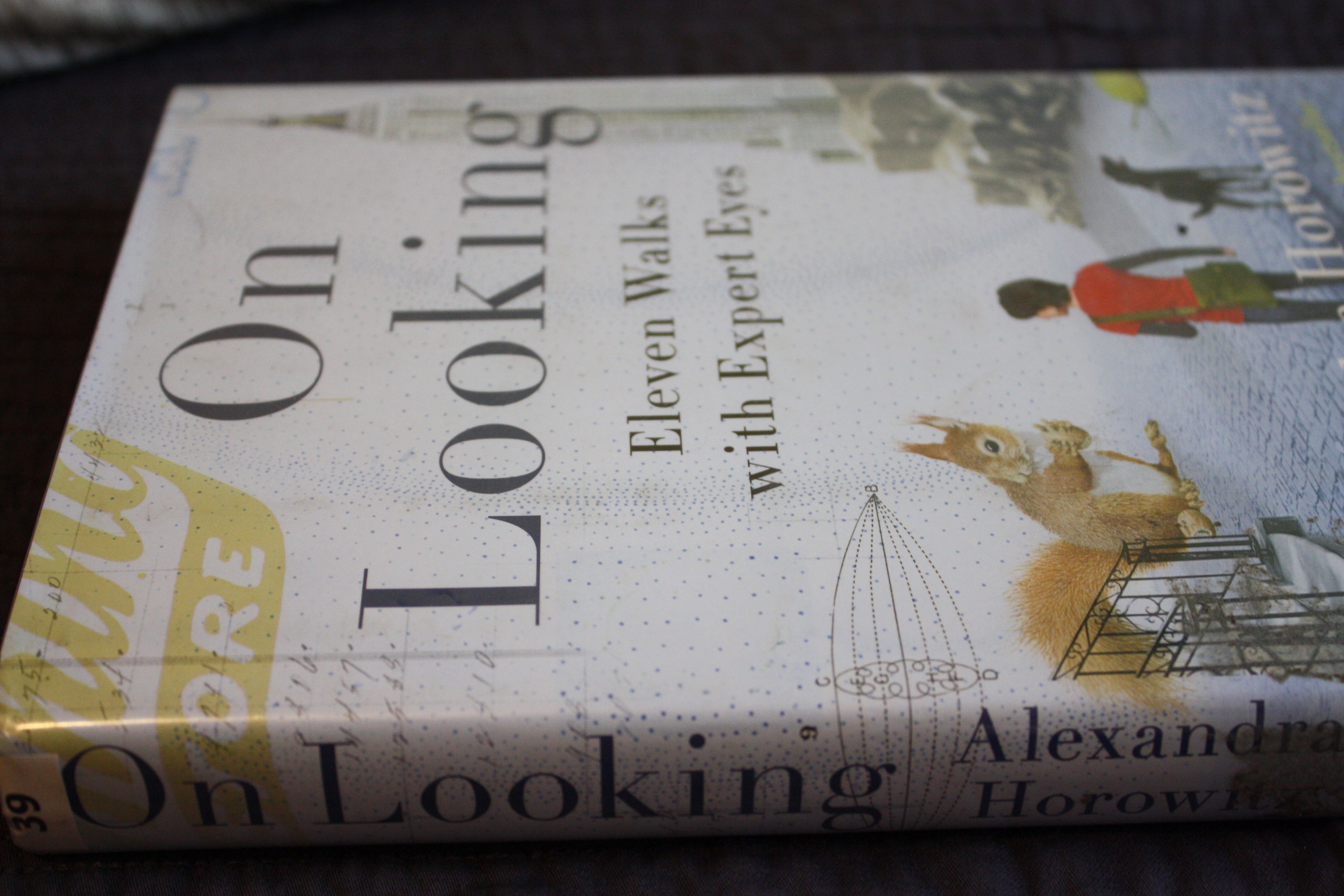
    Sherlock Holmes said “The world is full of obvious things which nobody by any chance ever observes.” As anyone who has walked from work to the subway in a daze, you know that the famous fictional detective is right. When we walk through our city streets, we often miss most of what we pass.

    Alexandra Horowitz tackles this “attention blindness” in an ingenious way. She enlists eleven experts in observation as her walking companions through New York City: a geologist, a typographer, an illustrator,  a field naturalist, an urban wildlife expert, a blind person, a sound designer, and her own toddler and dog, among others.  Horowitz’s astounding and delightful On Looking: Eleven Walks with Expert Eyes  (public library) will inspire you to see your own paths through NYC in an entirely new way.

    2016-06-01 10.10.47

    Finding the Sea Graveyard

    When Horowitz walks her city block with the geologist Sidney Horenstein, he introduces a fascinating idea about the asphalt under our feet: “there are only two things on earth: minerals and biomass (plants and animals). Everything that we have got here has to be natural to begin with – so asphalt is one of those things.”

    Horowitz describes the epiphany of re-conceiving the city, not as man-made objects, but as naturally occurring materials that have been recombined. Even the stone of our buildings soften and erode from water, wind, and time. “Eventually, this town – all towns – will dissolve and become fodder for another generation’s construction.”

    The geologist and Horowitz take a closer look at the limestone of a building. Limestone rock was once sediment on the sea floor, and ancient sea worms burrowed through it. Horowitz describes seeing the sea worms paths on a building limestone façade for the first time:

    Suddenly I saw them everywhere. The worm traces read like ancient graffiti down the length of the building. My view of the street was entirely changed: no longer passive rock; it was a sea graveyard. I was nearly speechless.

    2016-06-01 10.14.48
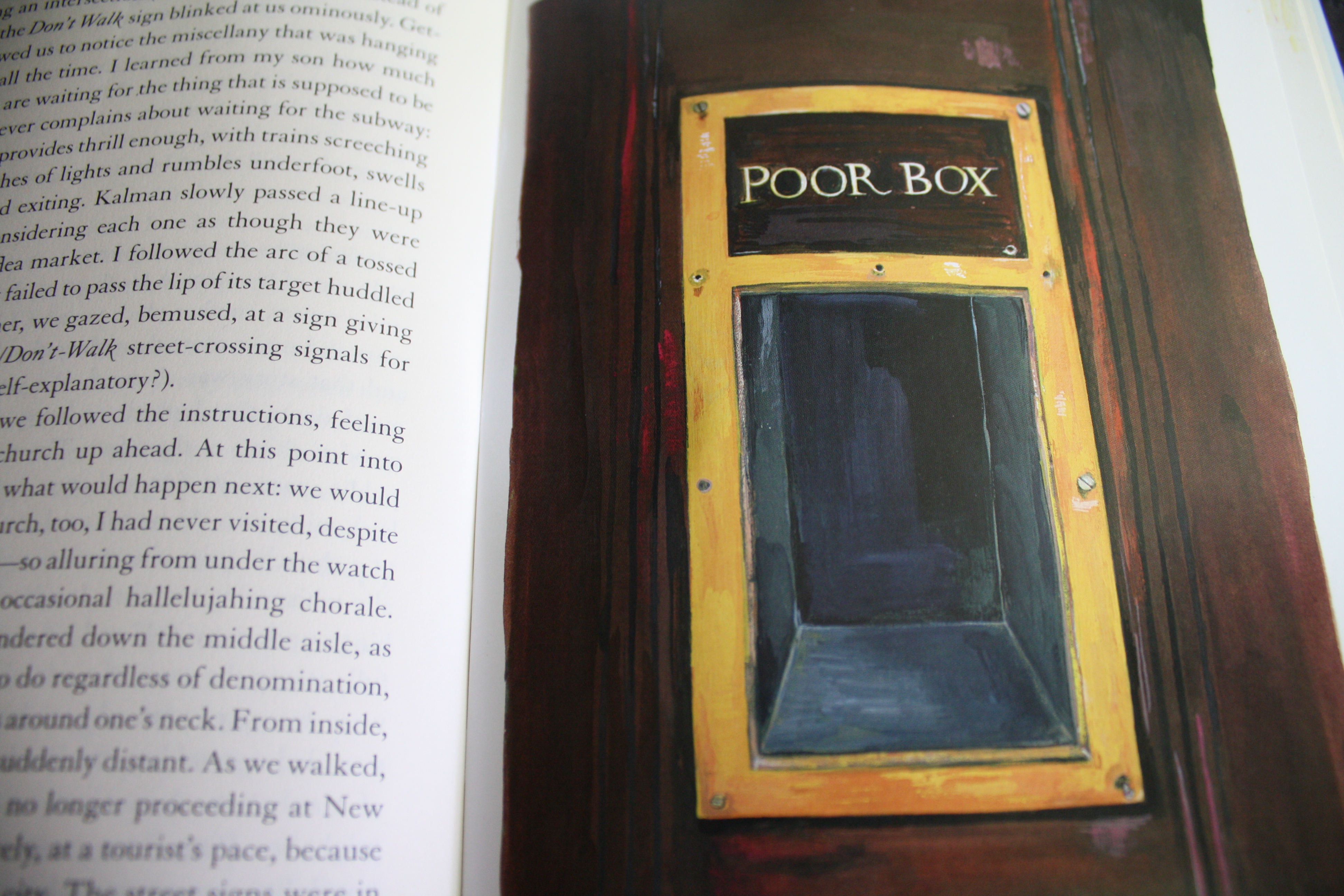
    From illustrator Maira Kalman’s walk
    2016-06-01 10.14.04
    Another illustration from Maira Kalman’s walk

    The Art of Seeing of NYC

    Horowitz’s book touches on a myriad of ways of seeing New York City, from the insect world to urban wildlife to an artist’s view of a common street scene. Throughout her many walks with experts, Horowitz, a cognitive scientist, weaves in the latest research on neuroscience. It’s an engaging way to learn more about our everyday surroundings.

    If you feel like your own daily walks through NYC have become stale, On Looking is a wonderful encouragement to look more deeply. It’s a perfect inspiration when trying new experiments in attention.

    For more inspiration to notice nature, check out these other worthwhile books.

    Share this:

    • Click to share on Tumblr (Opens in new window) Tumblr
    • Click to email a link to a friend (Opens in new window) Email
    • Click to share on Reddit (Opens in new window) Reddit
    • More
    • Click to share on LinkedIn (Opens in new window) LinkedIn
    • Click to share on Pinterest (Opens in new window) Pinterest
    • Click to share on Bluesky (Opens in new window) Bluesky
    Like Loading…
  • Signs You Might Be Nature Deprived

    Signs You Might Be Nature Deprived

    May 31, 2016

    Here are a few signs that you may miss nature:

    • You’ve said “We didn’t really have a Spring this year.”
    • You only spend time outside to get from point A to point B
    • You feel like time is speeding up and your days pass in a blur
    • You work long hours and you forget to take breaks
    • You are tired, worn out, exhausted
    • You find yourself seeking out nature documentaries, “cabin porn,” and pictures of animals
    Williams Agate cabin
    Do you look at pictures of cabins all day? You may be nature deprived. Image from Cabin Porn.
    • You dream about leaving your life so you can hike the Pacific Coast Trail
    • You think that there isn’t any nature in New York City and you need to go on vacation to find it
    • You feel like you are on a treadmill of work and need something to look forward to
    • You look at a glowing screen all day, but have a hard time unplugging when you get the chance
    • If you misplace your earbuds, you panic at the thought of a commute without music or a podcast
    • There was a time when you were younger that you thought about animals or wondered about oceans or stars. You are an adult now and you don’t have  time to think that way anymore.

    Do any of these statements feel familiar?

    If so, start here with a few ideas of how to re-introduce yourself to the natural world, even in New York City.

    Let me know what you think in the comments below.

    Share this:

    • Click to share on Tumblr (Opens in new window) Tumblr
    • Click to email a link to a friend (Opens in new window) Email
    • Click to share on Reddit (Opens in new window) Reddit
    • More
    • Click to share on LinkedIn (Opens in new window) LinkedIn
    • Click to share on Pinterest (Opens in new window) Pinterest
    • Click to share on Bluesky (Opens in new window) Bluesky
    Like Loading…
  • Notice the Ephemeral: Roses

    Notice the Ephemeral: Roses

    May 30, 2016

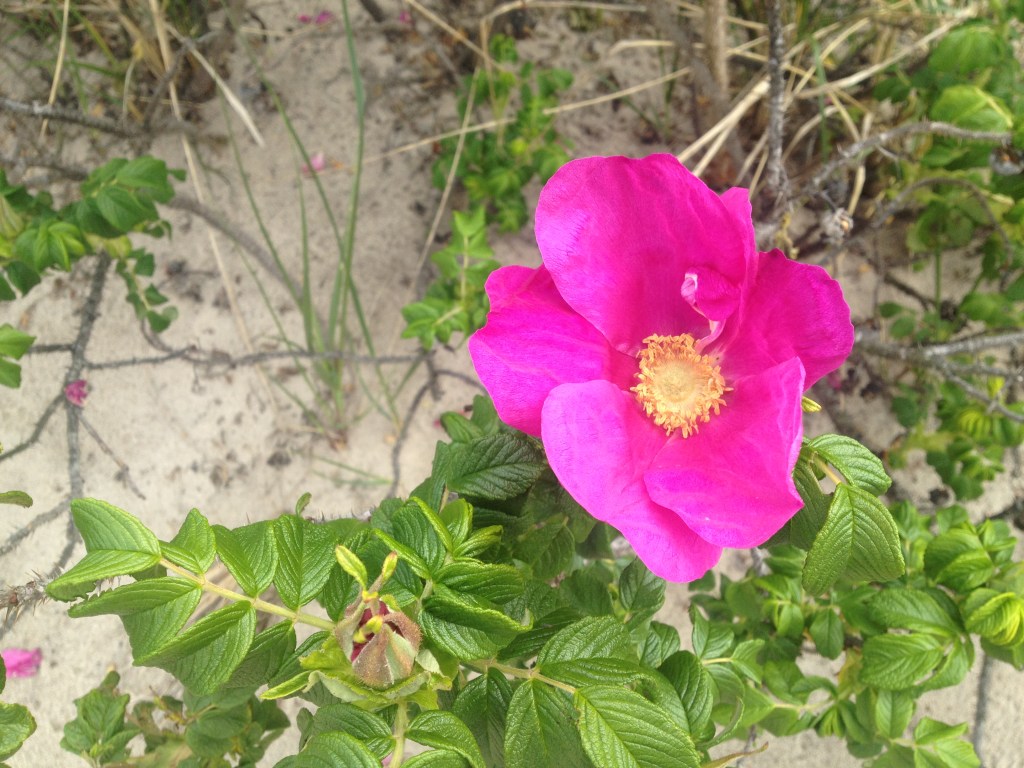
    Roses are blooming across the boroughs of NYC. Last week I smelled the sweet fragrance of seaside roses (Rosa rugosa) in the dunes behind Plumb Beach.

    You can find roses blooming along the greenest neighborhood blocks,  Brooklyn Botanic Garden’s Rose Garden, and the New York Botanic Garden’s Peggy Rockefeller Rose Garden. Rose blooms should peak in the next week or so.

    2016-05-18 14.52.40
    2016-05-18 14.54.05
    2016-05-18 15.23.30
    Photo May 22, 2 44 44 PM

    Here’s a reminder to notice the ephemeral. Now is the best time to linger and smell the roses.

    Did you see any roses today? Let me know in the comments below.


    Share this:

    • Click to share on Tumblr (Opens in new window) Tumblr
    • Click to email a link to a friend (Opens in new window) Email
    • Click to share on Reddit (Opens in new window) Reddit
    • More
    • Click to share on LinkedIn (Opens in new window) LinkedIn
    • Click to share on Pinterest (Opens in new window) Pinterest
    • Click to share on Bluesky (Opens in new window) Bluesky
    Like Loading…
  • Weekend Plans: Canoeing, Night Walks, Sleeping Trees

    Weekend Plans: Canoeing, Night Walks, Sleeping Trees

    May 27, 2016

    My Memorial Day weekend promises to be a time with friends, camping, and stargazing.

    More ideas for the long weekend in NYC (May 28-30, 2016):

    • Put out the picnic blanket in your favorite park, look up, and collect clouds
    • Take a nocturnal wildlife walk in the salt marshes of Marine Park, Brooklyn
    • Brush up on your basic canoeing skills at Oakland Lake in Alley Pond, Queens
    • Read Atlas Obscura’s article about how trees may sleep
    • Check out Central Park’s newly opened Hallet Nature Sanctuary

    Share this:

    • Click to share on Tumblr (Opens in new window) Tumblr
    • Click to email a link to a friend (Opens in new window) Email
    • Click to share on Reddit (Opens in new window) Reddit
    • More
    • Click to share on LinkedIn (Opens in new window) LinkedIn
    • Click to share on Pinterest (Opens in new window) Pinterest
    • Click to share on Bluesky (Opens in new window) Bluesky
    Like Loading…
  • Spot a Horseshoe Crab

    Spot a Horseshoe Crab

    May 26, 2016

    Most people think the only wildlife in New York are pigeons and pizza rats. But there are hundreds of species flying over, crawling under, and swimming around the city that never sleeps. Perhaps one of the most intriguing is the “living fossil” – the horseshoe crab.

    The Atlantic horseshoe crab (Limulus Polyphemus) is actually not a crab at all. It is more closely related to spiders, ticks, and scorpions. It looks a bit like a flattened army helmet with a tail. Known as a “living fossil,” the horseshoe crab hasn’t changed much in the last 445 million years; they are thought to have evolved in the same ancient seas as the trilobites.

    Getting Under the Hood

    What has six pairs of claws, nine eyes, and a tail that can sense light? That’s right, our horseshoe crab. The crab uses its first pair of armlike claws for feeding, four pairs for walking, and the last pair for pushing. It has book gills (so named as they are shaped like the pages of a book) which store small amounts of water. These gills allow the horseshoe crab to breathe for a short amount of time on land.

    Its long tail, the “telsen,” is not dangerous. The crab uses it to steer while in the water and to right itself if it gets flipped over on land. If you see a horseshoe crab upside down and struggling, you can flip it over to help it on its way. Be careful not to grab a horseshoe crab by its tail as you can injure it that way.

    Photo May 22, 2 05 45 PM
    Photo May 22, 1 33 29 PM
    Photo May 22, 2 03 51 PM
    Photo May 22, 2 13 06 PM

    Full Moon Party at High Tide

    Horseshoe crabs come ashore to mate on New York City beaches in May and June of each year.  Mark your calendars as this is a sight to behold.  Females leave the water with males grasping the backs of their shells. Sometimes a second, third, or even fourth male will hold on to the female and bodysurf up the beach in a crab conga line.

    “When the amorous crabs hit the beach, they look like a sinewy, brown subway train pulling in for a station stop.”  – Margaret Mittlebach & Michael Crewdson, Wild New York

    The best time to see the horseshoe crab mating is on a full or new moon at high tide. The females glide in on the high tide to travel far up the beach and dig a nest to lay tiny green eggs. Males crawl as quickly as they can to be the first to fertilize the eggs. Afterwards, the tide takes them back out into deeper waters.

    In a couple of weeks, at the next highest tide, the crab eggs hatch and the tide sweeps the newborns out to sea. That is, if the eggs hatch. The eggs are an important food source for migrating shorebirds. Some biologists think that some shorebirds’ long-distance Arctic migrations are timed perfectly to feast upon the eggs of horseshoe crabs.

    After the Party Is Over

    Horseshoe crabs spend most of their lives wandering around on the bottom of the North Atlantic coastal shelf, eating mollusks and worms. Your best bet of seeing a live horseshoe crab is during mating season in May and June.

    Don’t worry if you missed it this year. You have a great chance of seeing the remnants of horseshoe crab on any of our city beaches at any time. A horseshoe crab molts its shell 17 times before it reaches adulthood at about nine years old. The abandoned shells you see on the beach may not be corpses, but just a shell the crab had to shed before growing a new one.

    Biologists estimate that a horseshoe crab can live up to 40 years. That’s a lot of Full Moon parties.

    Places in NYC to See a Horseshoe Crab

    You have a good chance of seeing a horseshoe crab shell on any city beach.

    Here are the best places in NYC to see the horseshoe crabs mating in May and June:

    • Plumb Beach, Brooklyn
    • Twin Islands / Orchard Beach at Pelham Bay, Bronx
    • Calvert Vaux Park, Brooklyn
    • Jamaica Bay, Queens
    • Dead Horse Bay, Brooklyn
    • Great Kills, Staten Island

    You can learn more about the monitoring of horseshoe crabs at New York Horseshoe Crab Monitoring Network.

    Have you ever spotted a live horseshoe crab in NYC?  Saw a molted shell? I’d love to learn where you saw it or what you think in the comments below.

    Share this:

    • Click to share on Tumblr (Opens in new window) Tumblr
    • Click to email a link to a friend (Opens in new window) Email
    • Click to share on Reddit (Opens in new window) Reddit
    • More
    • Click to share on LinkedIn (Opens in new window) LinkedIn
    • Click to share on Pinterest (Opens in new window) Pinterest
    • Click to share on Bluesky (Opens in new window) Bluesky
    Like Loading…
  • Discover the Prospect Park Ravine

    Discover the Prospect Park Ravine

    May 23, 2016

    If you long to sit under the shade of towering trees and listen to the splashing of a waterfall, you can find it in Brooklyn. Prospect Park’s Ravine meanders through Brooklyn’s only forest and passes a babbling stream, a verdant pool, and a fall along the way. It’s just slightly off the beaten path in popular Prospect Park and it is one of my favorite spots in the city.

    Step Away from the Crowd

    The Ravine is located between the Long Meadow and the Nethermead, the two great open meadows in the park. One of the pleasures of the Ravine is moving from a huge rolling expanse (often crowded with picnics and games) to a shaded narrow path. You are suddenly surrounded by some of the oldest trees in the park. No buildings or roads can be seen from within the Ravine. The sounds are dampened. Within a few steps you have travelled far away.


    The brook of the Ambergill
    The brook of the Ambergill
    The boulders of Rock Arch Bridge
    The boulders of Rock Arch Bridge
    Ambergill Falls
    Ambergill Falls
    Ambergill Pool
    Ambergill Pool
    View from Esdale Bridge
    View from Esdale Bridge


    Follow the Sound of Water

    You can begin at the Esdale Bridge which overlooks the Ambergill stream. Often you can see starlings, sparrows and other birds bathing here. As you enter the Ravine, you may see chipmunks or even rabbits along the left slope of Sullivan Hill. As you follow the stream, you’ll come to the Ambergill Pool, a forested glen often visited by mallards or herons. You may be able to spot a turtle or two sunning along the banks. Follow the sound of rushing water and you’ll soon be standing at the Ambergill Falls.

    The Ravine is a perfect place to listen carefully.  If you hear a non-human voice, pause and listen closely. It was in the Ravine that I heard the loud smacking call of the chipmunk for the first time. It was here that I first heard the haunting flute call of the wood thrush.

    Towering tulip tree
    Towering tulip tree
    Ambergill stream
    Ambergill stream
    2016-05-23 17.53.41
    The path through the Ravine
    The path through the Ravine

    Inspired by the Adirondacks, Almost Lost to Erosion

    The park’s designers, Frederick Law Olmested and Calvert Vaux, were inspired by their time in the Adirondack Mountains. The Ravine’s stream and steep gorge is a recreation of that landscape. Unfortunately, the sandy clay of Brooklyn’s terminal glacier moraine eroded badly. Over time, silt filled and then completely buried the original waterways. The beauty you see now is because of the rehabilitation effort that began in the 1990s and is still ongoing.

    Pausing in the Oldest Part of the Forest

    Passing the Falls you can now see the oldest, thickest parts of Brooklyn’s only forest. You’ll find all types of oaks (white, red, scarlet, and black), hickory, black birch, black beech, tulip trees, and sweet and sour gum trees. Woodpeckers, hawks, and even owls have been seen in this part of the woods. This is a good place to take a long, considered look at a tree.

    To learn more about the Ravine and how to get there, check out the Prospect Park site.


    Share this:

    • Click to share on Tumblr (Opens in new window) Tumblr
    • Click to email a link to a friend (Opens in new window) Email
    • Click to share on Reddit (Opens in new window) Reddit
    • More
    • Click to share on LinkedIn (Opens in new window) LinkedIn
    • Click to share on Pinterest (Opens in new window) Pinterest
    • Click to share on Bluesky (Opens in new window) Bluesky
    Like Loading…
Previous Page
1 … 3 4 5 6
Next Page

Create a website or blog at WordPress.com


Loading Comments...
 

    • Subscribe Subscribed
      • Slow Nature Fast City
      • Join 88 other subscribers
      • Already have a WordPress.com account? Log in now.
      • Slow Nature Fast City
      • Subscribe Subscribed
      • Sign up
      • Log in
      • Report this content
      • View site in Reader
      • Manage subscriptions
      • Collapse this bar
    %d